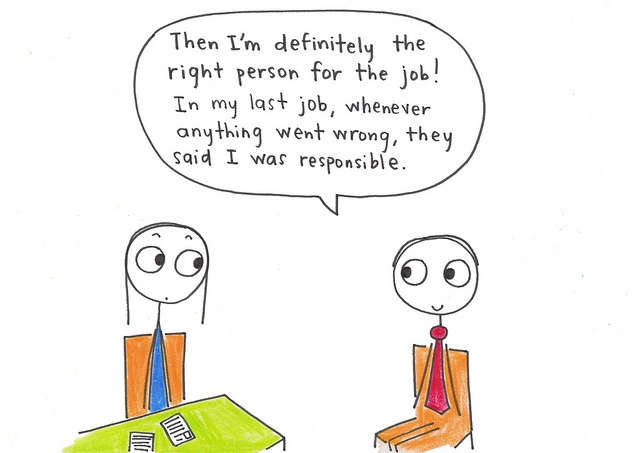
Having experienced thousands of job openings and millions of candidates at NewHire, one lesson is clear: Every recruiting project moves from the “ideal world of the job description” to “the real world of the people actually interested in your job.”
Perfect candidates are an extremely rare breed. This Harvard Business Review article (link: http://blogs.hbr.org/2013/01/dont-hire-the-perfect-candidat/) calls them “purple squirrels.” We tend to call them “flying mermaids.” However you think of them, there’s nothing wrong with finding the perfect candidate — if you can do it in the time frame required to meet your business objectives. When you find a candidate like this, think of it as a happy accident.
As in most of life, timing is everything. The bigger your hurry, the more compromising you must do. The higher the stakes, the more careful you feel you must be. Let’s look at two real-life scenarios to illustrate what we mean:
Scenario 1.
You have an opening for a sales representative (I know… you always do) on your team of five. People are a bit stretched covering the open position, but not impossibly so. Your Sales Manager is spending measurably less time coaching and more time selling, so this hurts the overall sales effort. Given the cost of the hire, the initial training and a significant ramp-up time, you’re looking at an investment of $50,000 to $60,000. You’ve seen six candidates who have been through a multi-step recruiting process, including a positive result on a sales assessment that you believe in. You’ve been at it for 90 days. Each of the candidates has significant pros and cons. Do you pick the best of the bunch or keep looking?
Scenario 2.
You own the business and it has been good, growing, and modestly profitable. You’ve been at it for six years and now you are thinking it’s time to bring in a General Manager or COO who will help you to the next level. You want to add more professional management experience to your organization. You want time to work on new products and spend more time with customers. People tell you that you’ll have to pay $110,000 to $130,000 to get the right person. Having mentioned your interest to a few colleagues, referrals are trickling in and you’ve met with three candidates. You liked one of them a lot, but she’s in demand and likely has other offers. Do you take the plunge and hire her?
Here are our answers:
Scenario 1: Pick the best of the bunch and get a sales rep hired.
Yes, it’s a significant investment and you want to get it right, but the cost of doing nothing exceeds the risk of hiring the wrong person. It’s difficult to calculate lost opportunity, but you know it’s there. Without a fully functioning sales machine it’s difficult to grow. Use 30, 60 and 90 benchmarks to measure whether your new hire is on the path to success. Keep sourcing, screening and interviewing candidates… there’s never a wrong time to hire a purple squirrel sales rep. Build the cost of sales rep turnover into to your annual budget so that you don’t fret every time a sales rep fails… it happens.
Scenario 2: Slow down! Back up and start over.
We are not opposed to “opportunistic hires,” but the business owner in this scenario has not spent any time clearly defining the role and responsibilities, nor have they thought about the behaviors and motivations that the GM or COO job would reward. What is the owner’s behavior profile? Should the new hire have the same kind of profile or should it be different, filling in leadership and management gaps. Would a hire coming from a large organization with a strong history of implementing corporate best practices be a good idea? Is the referral he liked, “the best available talent?” He doesn’t know WHO he doesn’t know, so expand the pool of candidates dramatically. Kiss a lot of frogs. It helps you identify when you’ve found your prince.
How many people do you interview for each position before you hire?